What Makes a Candidate Stand Out in the GTO Tasks: Lessons from Actual Assessors
- Vivek
3 Nov, 2025

5min
What Makes a Candidate Stand Out in the GTO Tasks: Lessons from Actual Assessors
When you step onto the GTO ground, it’s not just your strength or stamina being tested — it’s your mindset, teamwork, and leadership under pressure. The Group Testing Officer (GTO) doesn’t judge you for how fast you cross a plank or how loudly you shout commands; instead, he observes how you think, cooperate, and influence the group naturally.
One of the first things that make a candidate stand out is the first impression — those initial five minutes of interaction before any task begins. Assessors keenly observe your body language, enthusiasm, and clarity of thought. Candidates who appear calm, composed, and respectful toward others set a positive tone early. Confidence, when balanced with humility, immediately signals officer-like maturity.
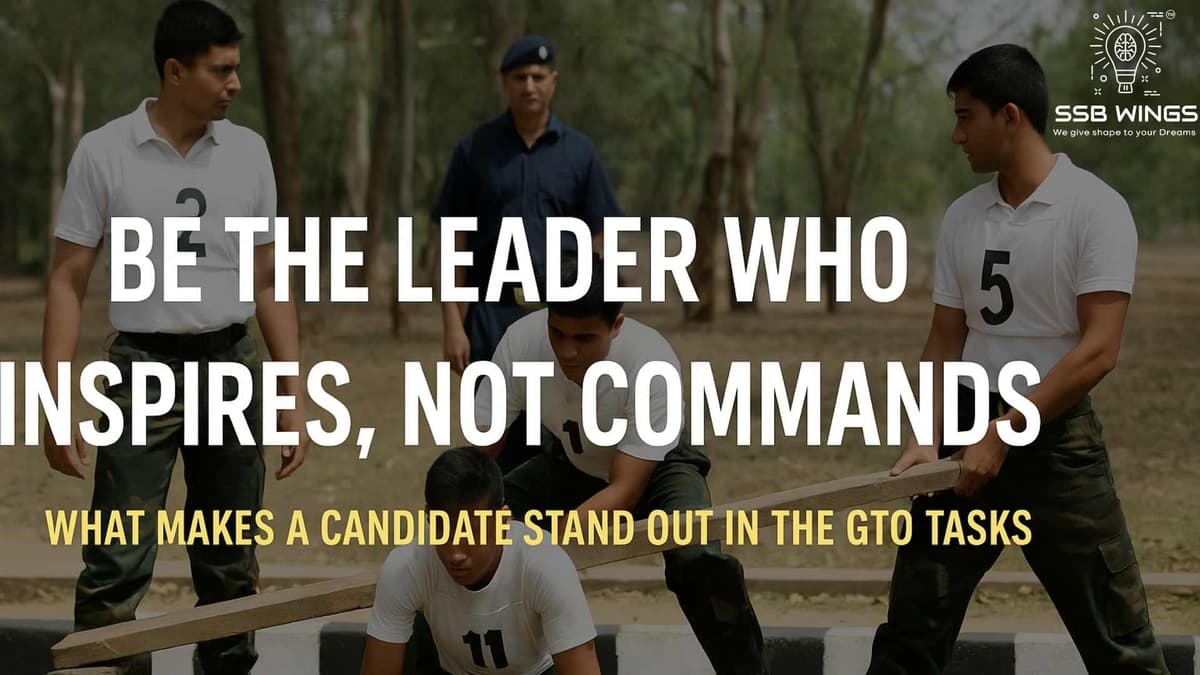
When it comes to leadership, most aspirants believe that being loud and dominating shows control — but experienced assessors know that true leadership doesn’t shout orders, it inspires action. The best candidates are those who listen, suggest logically, encourage quieter members, and take responsibility for the group’s outcome. They lead through example, not volume.
In GTO tasks, completing the task is never the real goal — how you do it matters far more. Assessors look for subtle things: your communication clarity, patience, cooperation, and your ability to stay active throughout. Even if your idea isn’t accepted, continuing to contribute positively shows maturity and adaptability — two key OLQs that carry immense weight.
Many candidates lose out because of common GTO mistakes — trying to overdominate, staying silent, or losing interest midway. Some rush to speak without listening; others focus too much on physical tasks and ignore the group. A recommended candidate strikes a balance — he is participative but not overbearing, helpful but not bossy, confident yet approachable.
Displaying Officer-Like Qualities (OLQs) naturally during the GTO is what separates a good candidate from a great one. Assessors can instantly identify forced behavior. Genuine cooperation, quick initiative, liveliness, and persistence are noticed even in short moments. Whether you’re handling a group discussion or a command task, your ability to keep the group cohesive and goal-oriented matters most.
Behind every task lies deep psychological observation. The GTO carefully notes how you behave when things don’t go your way — do you get irritated, give up, or find a new plan calmly? Your reactions in these small moments reveal your emotional stability, team spirit, and problem-solving approach, more than any physical achievement.
Many aspirants forget that cooperation outweighs competition in every GTO task. The SSB isn’t about proving that you’re better than others — it’s about proving that you can work with others to achieve a common objective. True teamwork, empathy, and support for group members make a lasting impact on the assessors.
There have been cases where a candidate who underperformed physically still got recommended because of his positive attitude and teamwork. For example, a candidate once failed to cross a hurdle but kept motivating his group till the end — his spirit, encouragement, and consistency earned him a recommendation. It’s never about perfection; it’s about potential.
Each task — from Lecturette to Command Task — is designed to assess different OLQs like confidence, clarity of expression, planning, and decision-making. Leaving a lasting impression requires consistency across all tasks. The assessors look for candidates who remain calm, logical, and inclusive, regardless of success or failure.
Ultimately, what truly makes a candidate stand out in the GTO is authentic leadership and unwavering cooperation. The GTO observes, silently noting every small behavioral cue — how you think, communicate, adapt, and carry the team forward. Remember, the SSB isn’t looking for superhumans; it’s looking for balanced, dependable individuals with the heart to serve and the head to lead.
So the next time you’re on the GTO ground, don’t try to impress — just express your natural sense of responsibility and teamwork. Because real leaders don’t command attention; they earn respect through their actions


